Strategy · Chess variant
Conscription Chess
Draft your army in secret. Reveal at the first move.
- In development
- Android
- iOS
- Web
- Online play soon

What it is
Every game of chess starts from the same position. This one doesn’t.
Before a piece moves, each player is given a conscription budget of 39 points — a queen costs 9, a rook 5, a bishop or knight 3, a pawn 1. That is exactly what a traditional army is worth. The king is free, and compulsory.
You spend that budget however you like and place what you bought anywhere in your own first three ranks. Three knights and a wall of pawns, or two queens and almost nothing else, are both legal. So is the traditional army, which is one tap away if you want it.
Neither player sees what the other drafted. The armies stay hidden until the board is revealed and the first move is played — so the opening is not a line you memorised, it is a read on what your opponent thought was worth buying.
The reveal
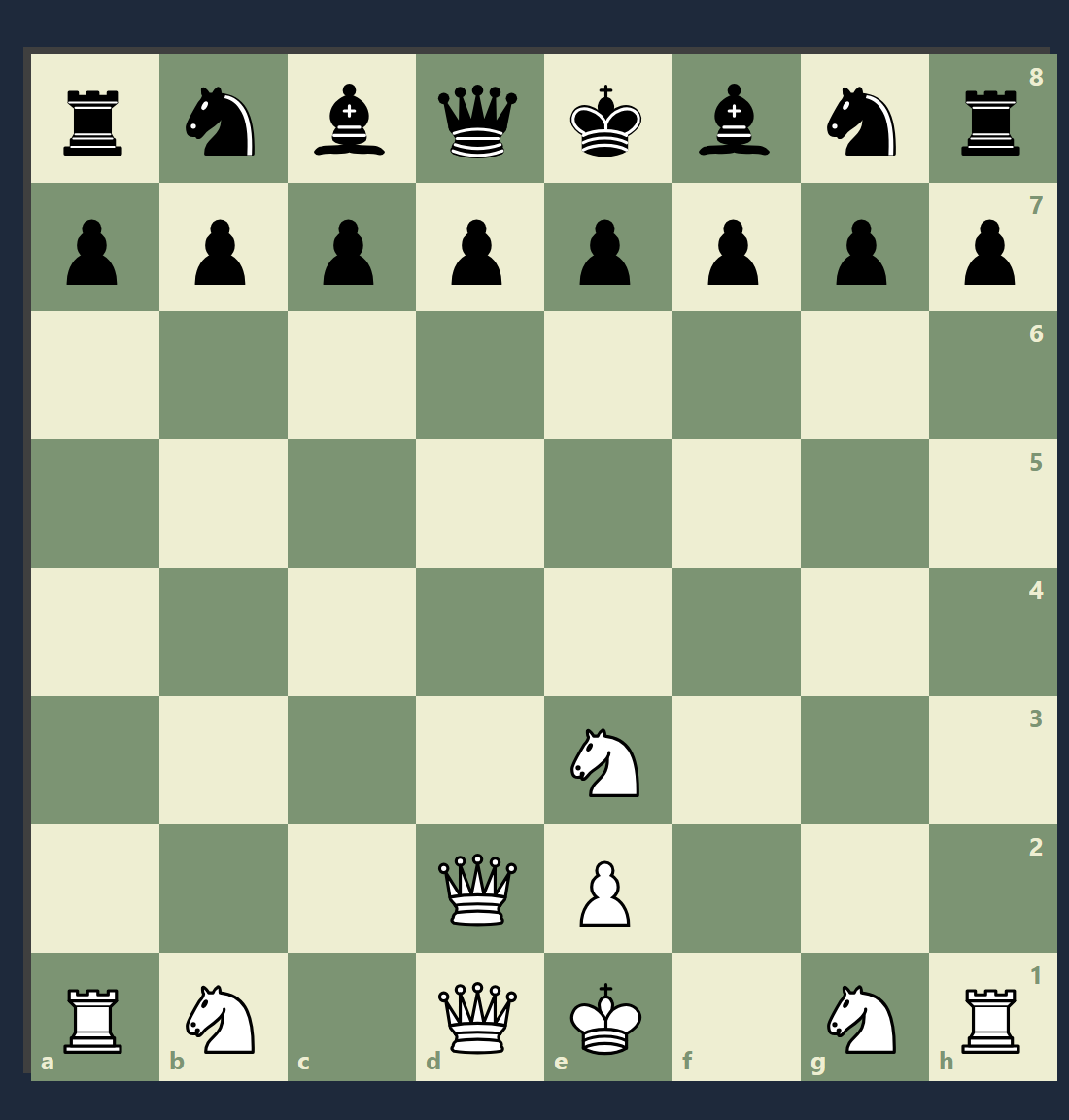
Both armies cost 39 points. Black spent it the traditional way; White bought a second queen and gave up the bishops and most of the pawns to pay for it. Neither player saw the other’s answer until this moment.
Online play
A secret draft is a better game against someone you have never met.
Pass-and-play asks both players to be honest about not peeking. Online, the secrecy stops being a courtesy: the server holds each army and simply will not send yours to your opponent until both of you have finished drafting. It is a rule of the game enforced somewhere neither player controls.
-
Find a game
Join the queue and you are matched with the first player looking for the same game. No lobby to read, no settings to agree on.
-
Or bring your own opponent
Friend codes pair you with someone specific, so a game between two people who already know each other does not have to go through the queue.
-
Live or correspondence
The same game with different deadlines. Play it out in one sitting while you are both connected, or a move at a time over days.
-
Clocks, resign, rematch
Timed games, an honest way to concede a lost one, and a one-tap return match against the same opponent — who will have seen what you drafted last time.
-
Close it and come back
Games survive losing signal or shutting the app. You reconnect to the position you left, with your clock where it should be.
-
No account, no details
Online play needs a way to tell two players apart, so the app makes up a random identifier for its own installation. It never asks for a name or an email. See the privacy policy.
Screens
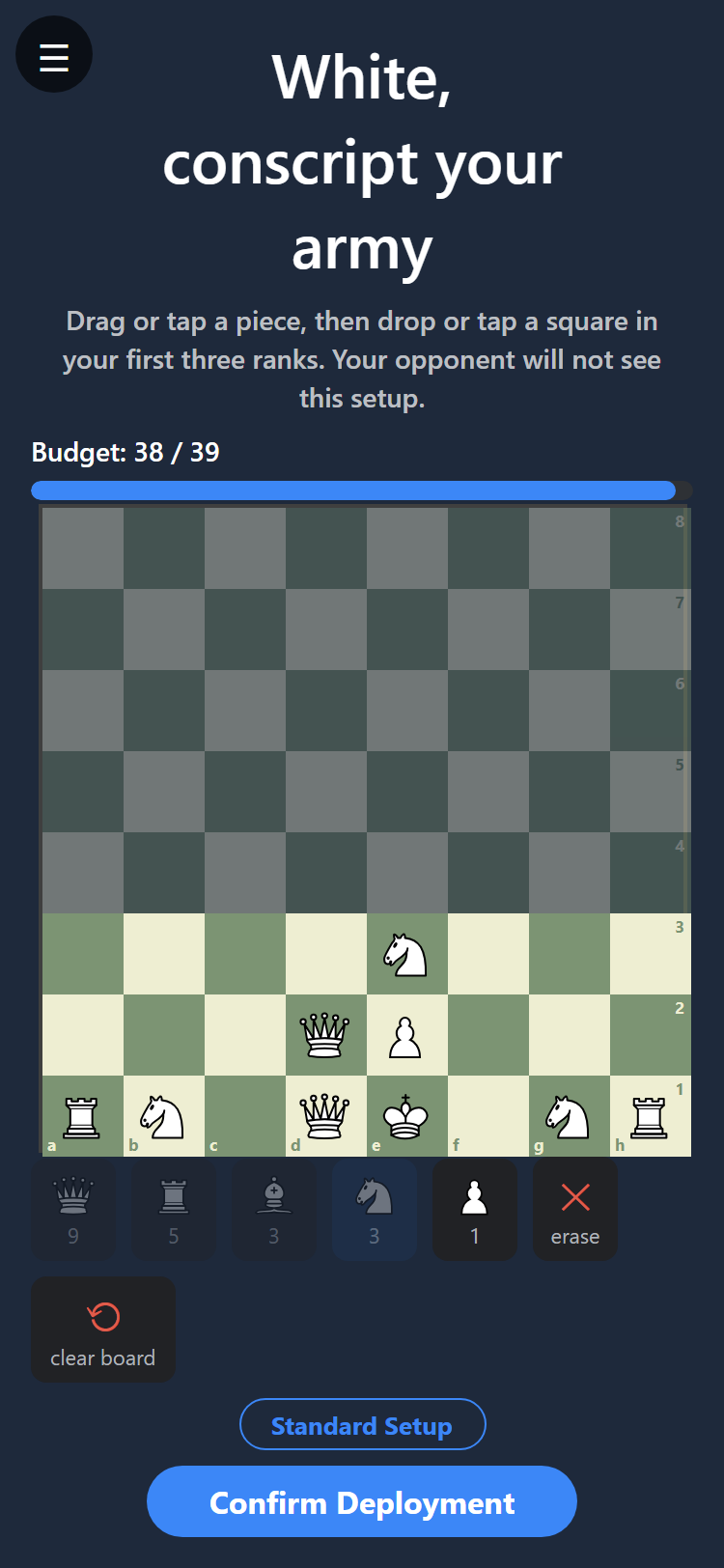
Conscription. Every piece has a price, and the bar shows what is left. 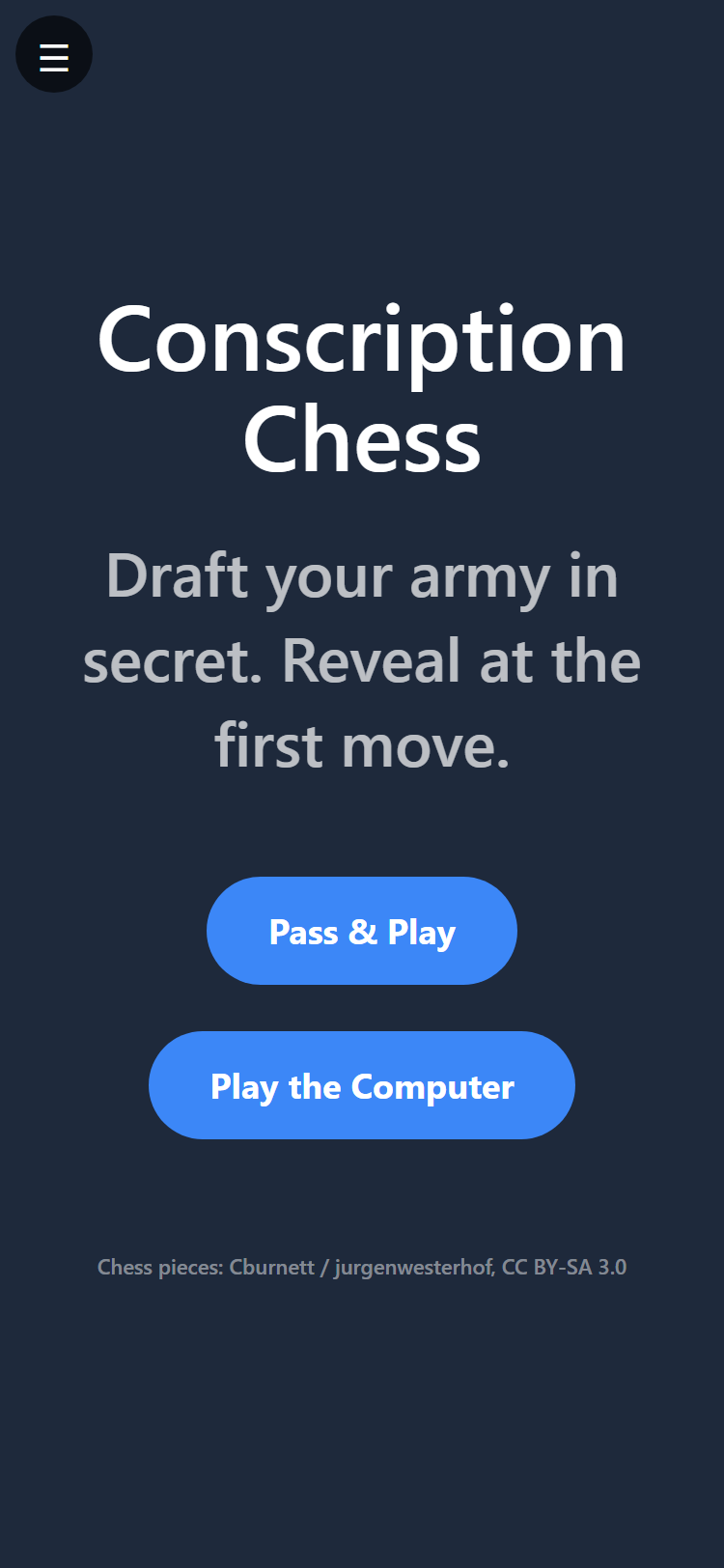
Four ways in. Online is the one still to open.
In the game
-
A 39-point budget
The exact value of a standard army, minus the king. Spend it on anything you like, at or under budget, one king, no two pieces on a square.
-
Your own three ranks
Placement is free within your first three ranks. Where a piece starts is as much a decision as whether you bought it.
-
No pawns on the back rank
The only placement rule beyond the budget. A pawn there can never be returned to once it moves, and it blocks a rank while doing nothing — so it is simply not allowed.
-
Drafted in secret
Secrecy is enforced by the game, not by the honour system. You are told that your opponent has finished drafting, never what they drafted.
-
Pass & play, or the computer
Hand the device back and forth for a local game, or play a Stockfish opponent — running natively on device and in WebAssembly in the browser.
-
Boards and pieces
Three piece sets, seven board themes and five interface themes, from Classic Green and Walnut through to High Contrast and Parchment. The piece sets are free; some of the boards and themes are in the Shop.
Both armies have been conscripted in secret. Pass the device back to reveal the battlefield and begin play.
Details
- Genre
- Chess variant
- Players
- Two locally, or vs. computer
- Platforms
- Android, iOS, Web
- Status
- In development; online play soon